
TEF-Talk Institutional Pilot Program
Making sense of student feedback at scale
TEF-Talk (Teaching Effectiveness Framework) helps universities identify themes, trends, and insights from large of qualitative student feedback.
We are currently seeking 2–4 research university partners to participate in a Spring 2026 pilot program.
Download the TEF-Talk Pilot Overview Deck Contact Us
The Challenge
Universities collect thousands of student comments every semester, but qualitative feedback is difficult to analyze at scale.
Most institutions rely on manual review or simple summaries, leaving valuable insight buried in the data.
TEF-Talk helps institutions identify patterns and trends across courses, departments, and time.
Platform Overview
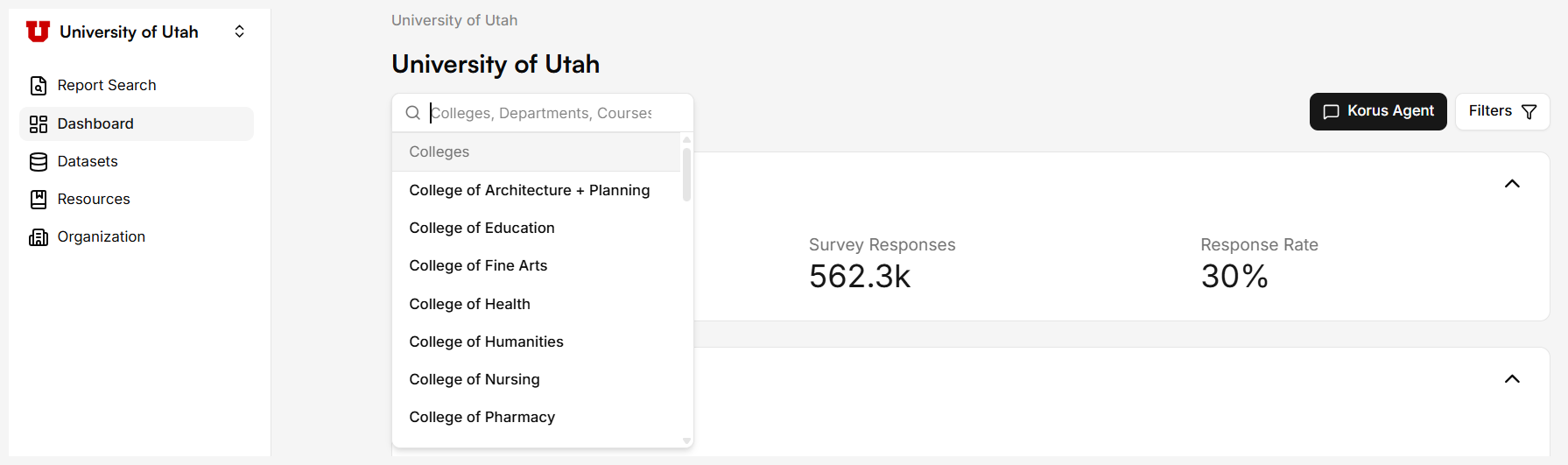
Explore Student Feedback Across the Institution
The platform allows institutions to move from individual comments to institutional insight.
Across the platform, users can explore feedback at multiple levels:
Faculty → Course → Department → College → Institution
This creates a micro-to-macro view of teaching effectiveness and student experience over time.
TEF-Talk is designed to operate within the structure of a university. The platform supports single sign-on (SSO) and role-based permissions aligned with the institution’s organizational hierarchy, allowing access to be configured for instructors, departments, colleges, and institutional leadership.
This ensures users can explore insights at the appropriate level while maintaining secure and controlled access across the institution.
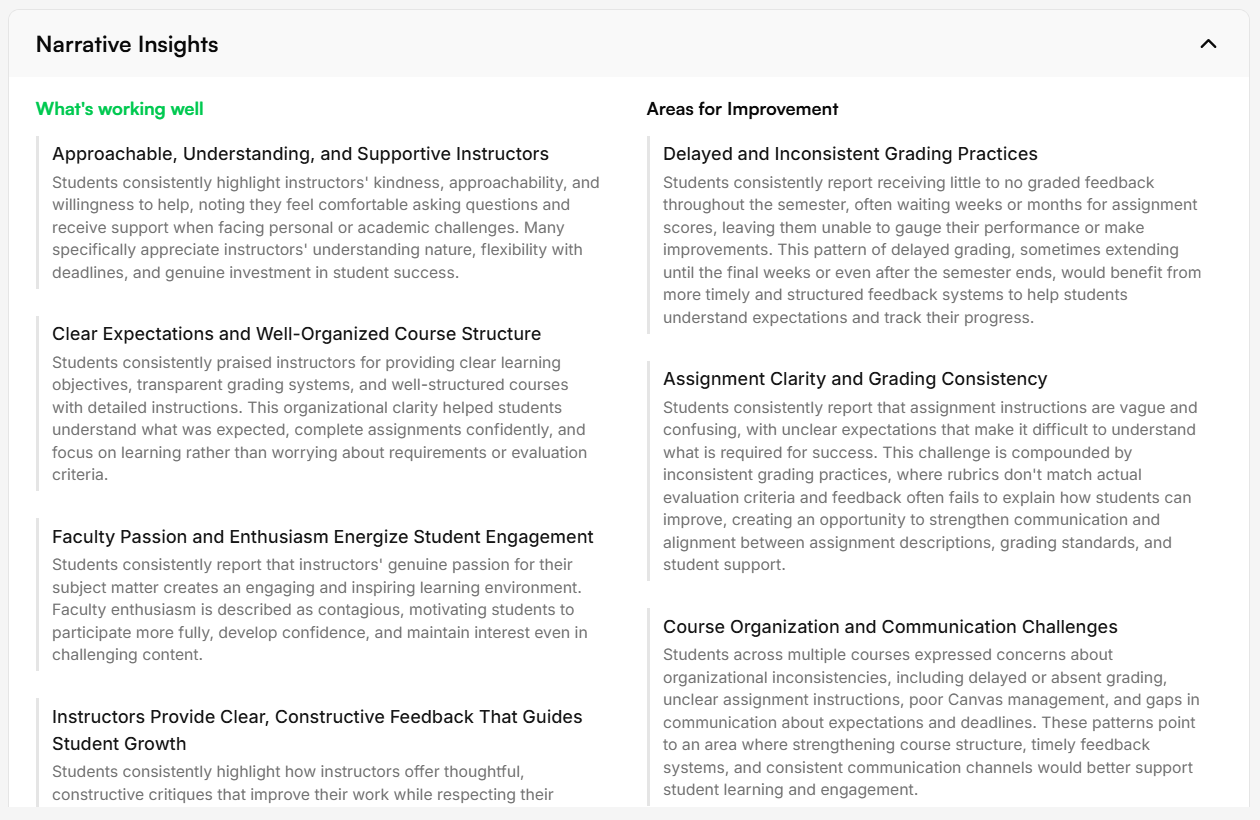
AI-Assisted Narrative Insights
TEF-Talk analyzes open-ended student comments and identifies recurring themes across courses and departments.
Instead of reading thousands of individual comments, users see synthesized insight summaries organized around:
• what students say is working well
• areas where improvement may be needed
Each insight is generated from underlying student comments, ensuring transparency and traceability.
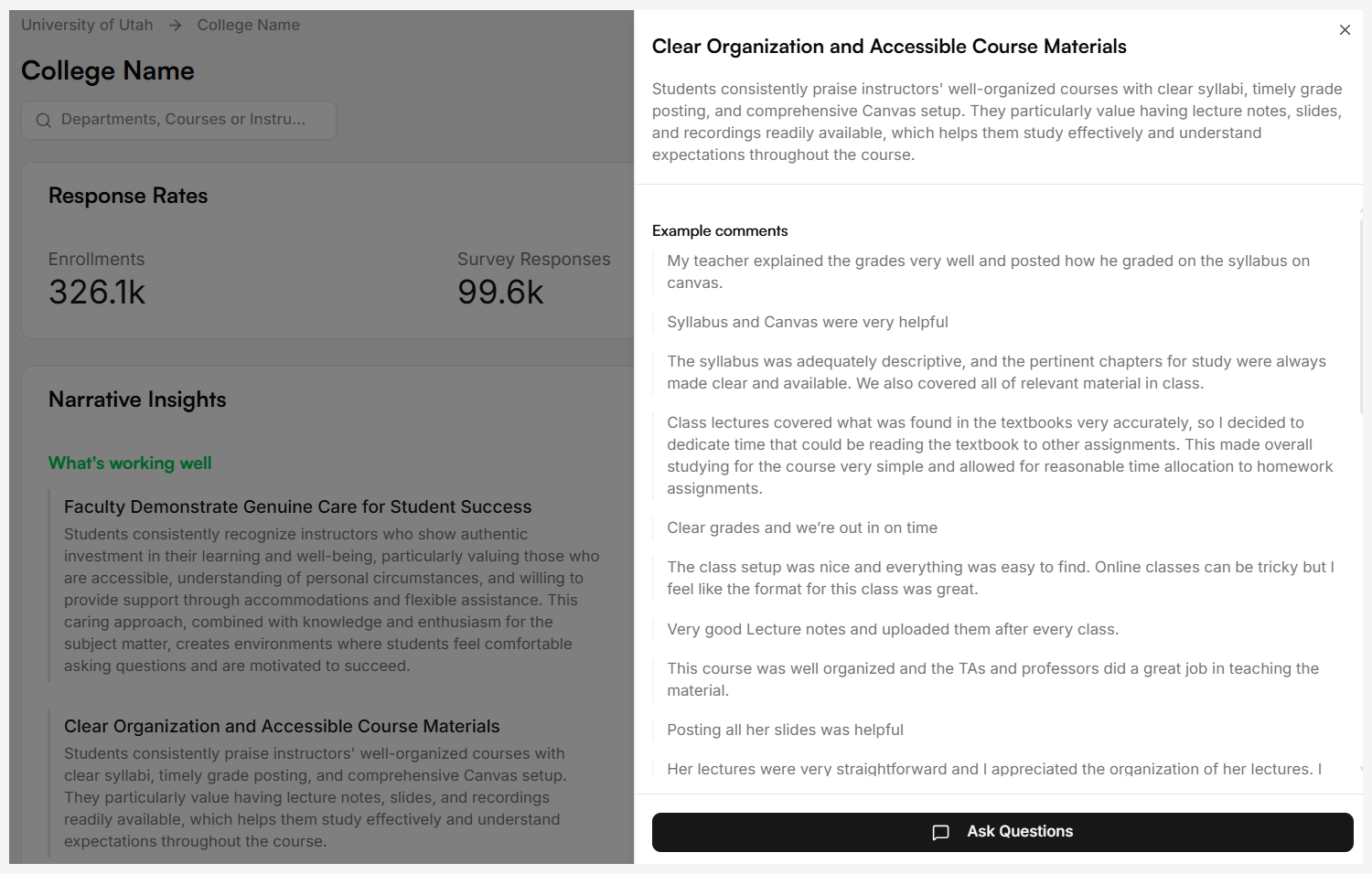
Trace Insights Back to Student Voice
Every synthesized insight links directly to the underlying student comments.
This allows faculty and administrators to explore the evidence behind each theme and understand how feedback is expressed in students’ own words.
Users can move easily between:
insight → example comments → institutional context.
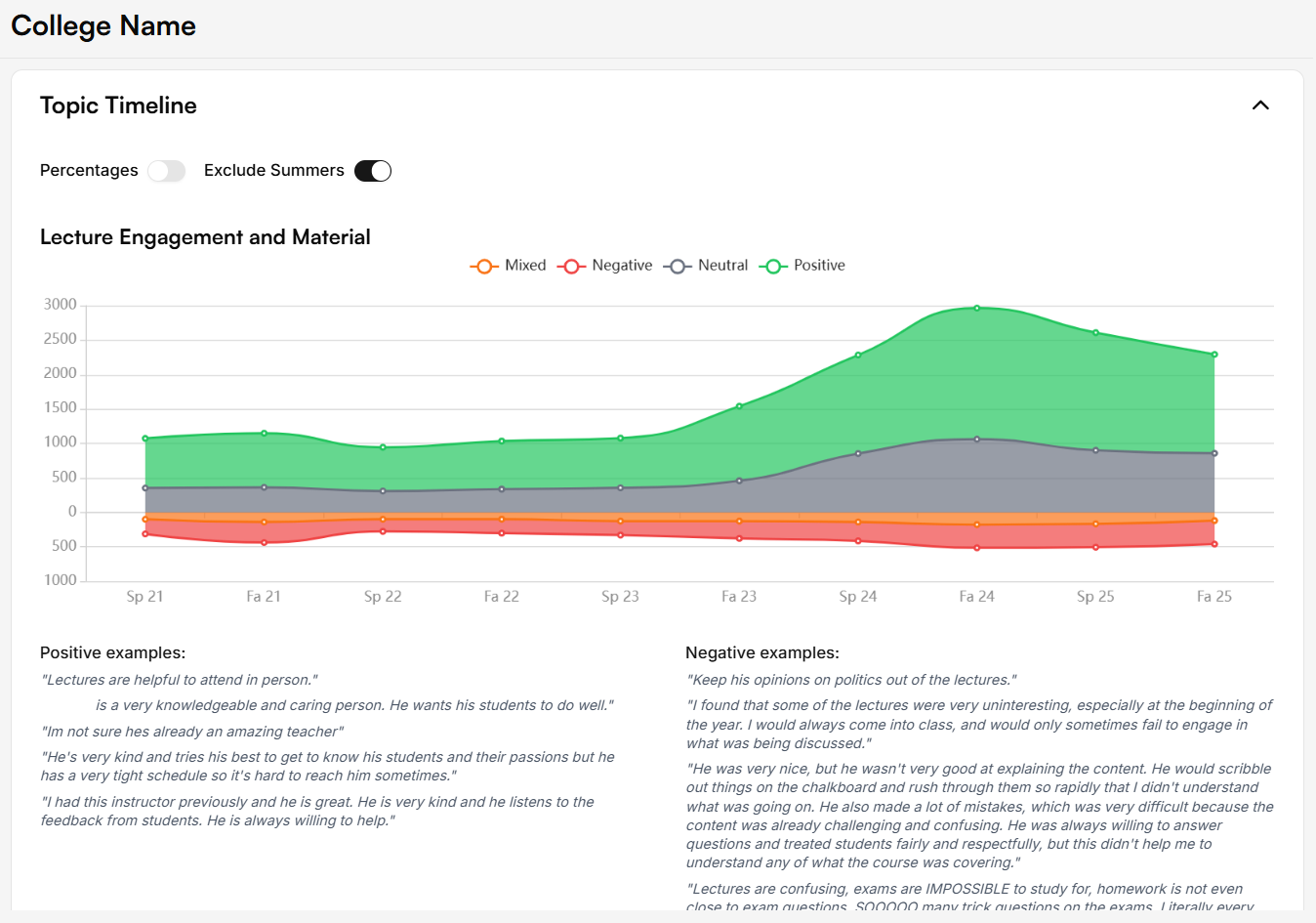
Identify Trends Across Semesters
TEF-Talk tracks how themes appear and change over time.
Institutions can identify:
• improving or declining student sentiment
• recurring concerns across semesters
• emerging patterns in teaching and learning
This provides a longitudinal view of qualitative student feedback.
Ask Questions of the Data
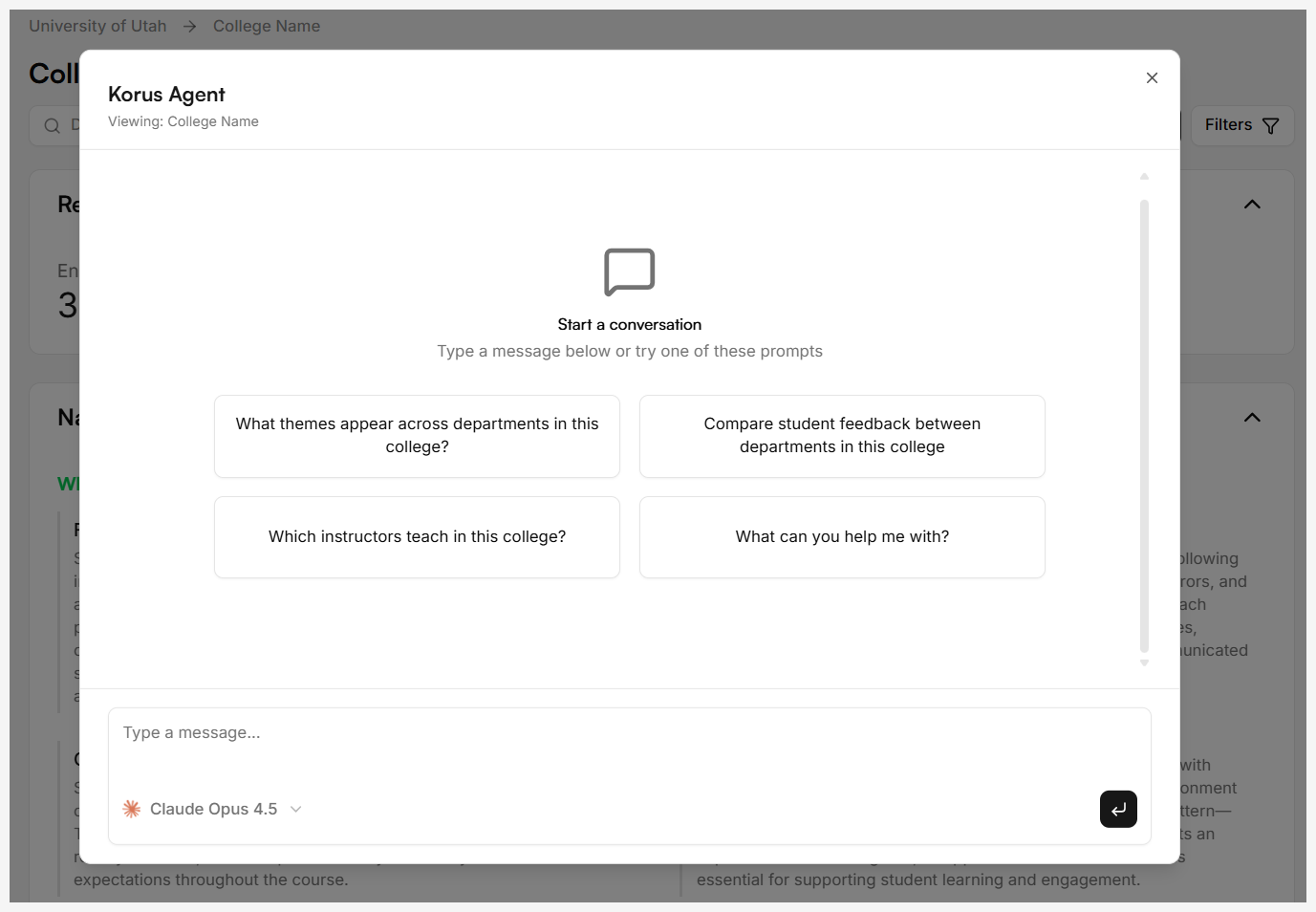
TEF-Talk includes an AI-assisted interface that allows users to explore feedback conversationally.
Example questions include:
• What themes appear in first-year STEM courses?
• Which courses show improving student sentiment over time?
• Where do students report barriers to participation?
This allows institutional teams to explore feedback in ways that traditional reporting tools cannot support.
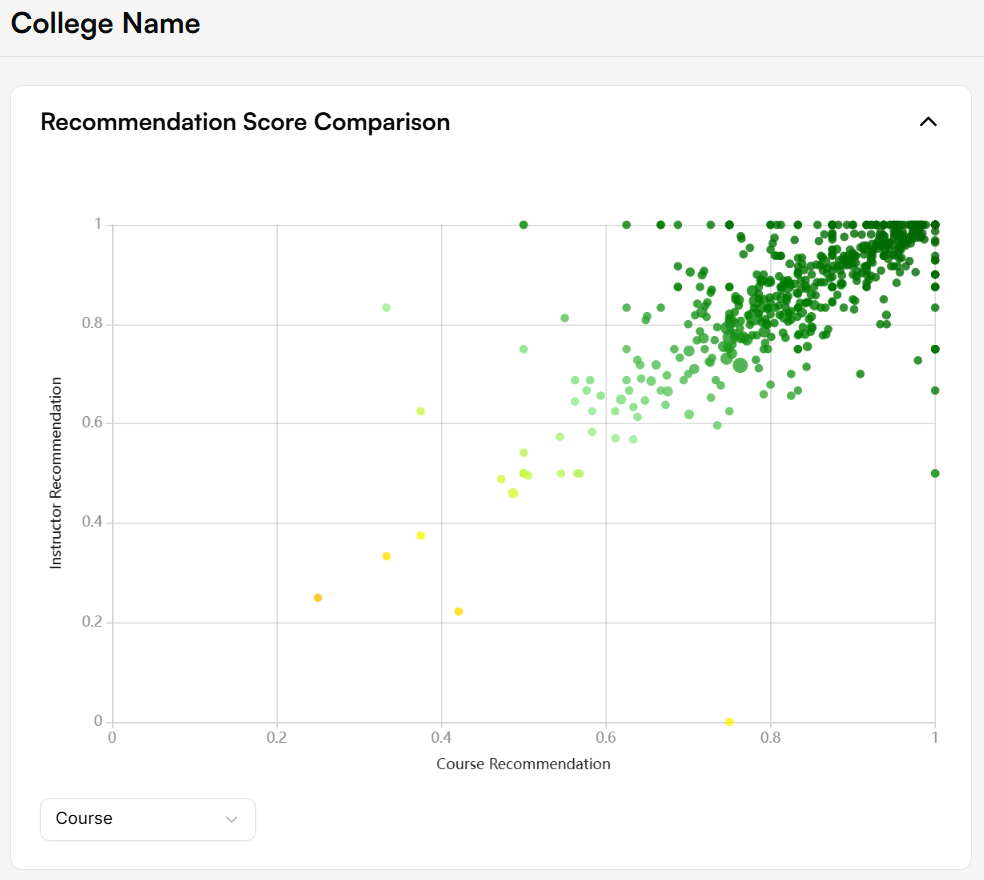
Explore Institutional Patterns
Administrators can analyze patterns across large numbers of courses and instructors.
These visualizations help institutions identify:
• courses with strong student experience
• outliers that may need support
• broader trends across departments or colleges.
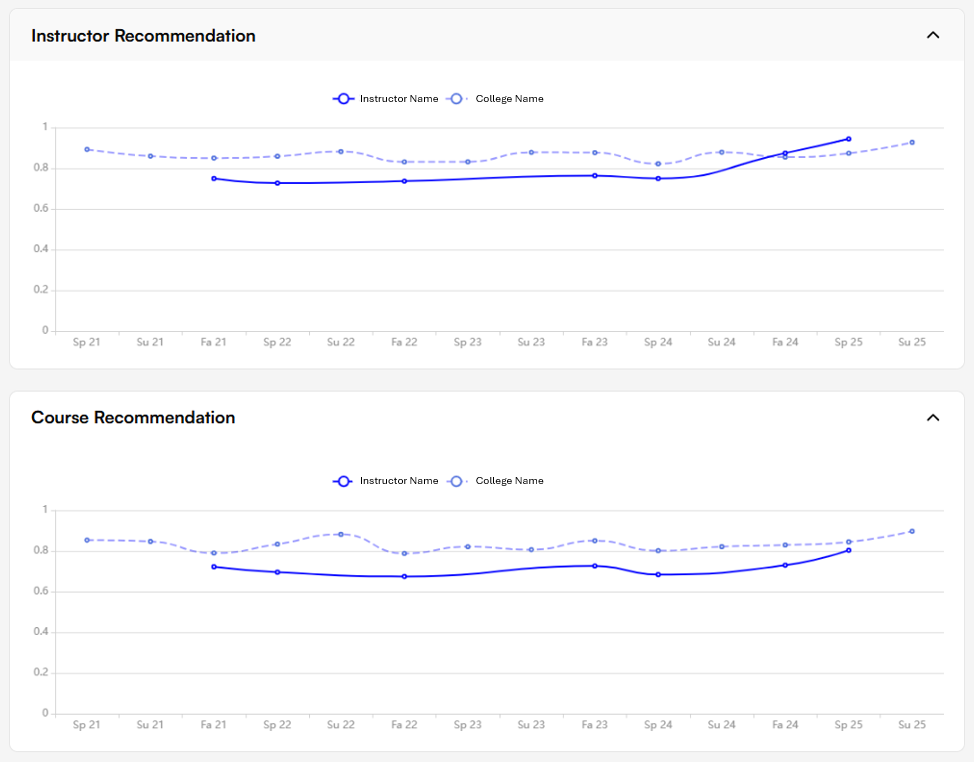
Track Feedback Trends Over Time
These visualizations allow institutions to examine normalized feedback metrics across multiple semesters.
Because metrics are standardized within the platform, users can compare results even when survey instruments or response scales change.
This makes it possible to:
• track trends in student experience over time
• compare course and instructor results with broader institutional benchmarks
• identify improvement, decline, or unusual patterns in feedback
Understand Response Patterns
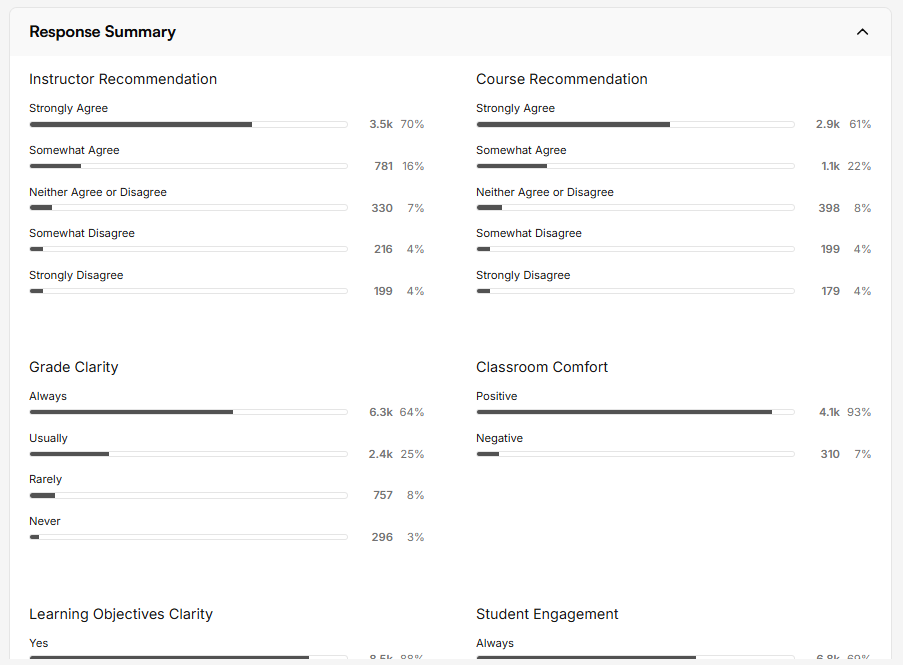
The platform also provides clear summaries of quantitative survey responses.
These views display response distributions and summary metrics for commonly used evaluation questions, helping institutions quickly understand how students responded across large numbers of courses.
This allows users to:
• review response distributions at a glance
• identify patterns in key evaluation metrics
• contextualize qualitative feedback with supporting quantitative data
Additional Platform Capabilities
Beyond exploratory analysis, TEF-Talk also supports several practical workflows commonly used by institutional teams.
Resource Connections
When themes or concerns are identified in student feedback, the platform can surface curated teaching resources that help instructors address common challenges. This allows institutions to connect feedback insights directly to faculty development resources.
Standardized Reports
TEF-Talk makes routine reporting easier by generating standardized summaries of student feedback across the institution.
Because the platform already analyzes student feedback, producing reports becomes a natural extension of the system rather than a separate reporting workflow.
This allows institutions to generate consistent reports across courses, departments, and colleges, even when survey tools or evaluation instruments change over time.
Spring 2026 Pilot Program
We are currently inviting 2–4 research universities to participate in a collaborative pilot of the TEF-Talk platform.
Pilot partners will:
• test the platform using institutional feedback data
• explore new approaches to analyzing qualitative feedback
• collaborate with the development team to refine the platform
The pilot typically runs one academic term.
Pilot Implementation
Once a university expresses interest, we follow a structured onboarding process that includes:
• defining the scope of the pilot
• preparing a sample dataset
• launching a pilot environment
• onboarding participating users
A detailed onboarding procedure is available for partner institutions.
Download the Pilot Overview Deck
If you would like to share this opportunity with colleagues, you can download a short overview of the TEF-Talk project and pilot program.
Download the TEF-Talk Pilot Overview Deck
This deck summarizes:
- the problem TEF-Talk addresses
- how the platform works
- examples of insights generated from qualitative data
- the structure of the Spring 2026 pilot program
Interested in Participating?
We are currently scheduling exploratory conversations with potential pilot partners.
To learn more or discuss the pilot opportunity, please contact:
Adam Halstrom
University of Utah
adam.halstrom@utah.edu